
Embark on a journey into the world of Market research for startups, where strategic insights pave the way for success. Get ready to dive deep into the realm of understanding target audiences and crafting direct marketing strategies that drive growth.
Importance of Market Research for Startups
Market research is crucial for startups as it helps them gather valuable insights about their target market, customers, competitors, and industry trends. By conducting thorough market research, startups can make informed decisions, mitigate risks, and identify opportunities for growth.
Benefits of Market Research for Startups
- Identifying market gaps: Market research helps startups identify unmet needs in the market, allowing them to develop products or services that address these gaps.
- Understanding customer preferences: By collecting data on customer preferences and behaviors, startups can tailor their offerings to meet the specific needs of their target audience.
- Evaluating competition: Through market research, startups can analyze their competitors’ strategies, strengths, and weaknesses, enabling them to differentiate themselves and gain a competitive advantage.
- Forecasting market trends: Market research helps startups stay ahead of industry trends, enabling them to adapt their business strategies and offerings accordingly.
Understanding Target Audiences through Market Research
Market research provides startups with valuable insights into their target audiences, helping them understand their demographics, preferences, buying behaviors, and pain points. By segmenting their target market and creating detailed buyer personas, startups can tailor their marketing strategies and product development efforts to effectively reach and engage their ideal customers.
Types of Market Research
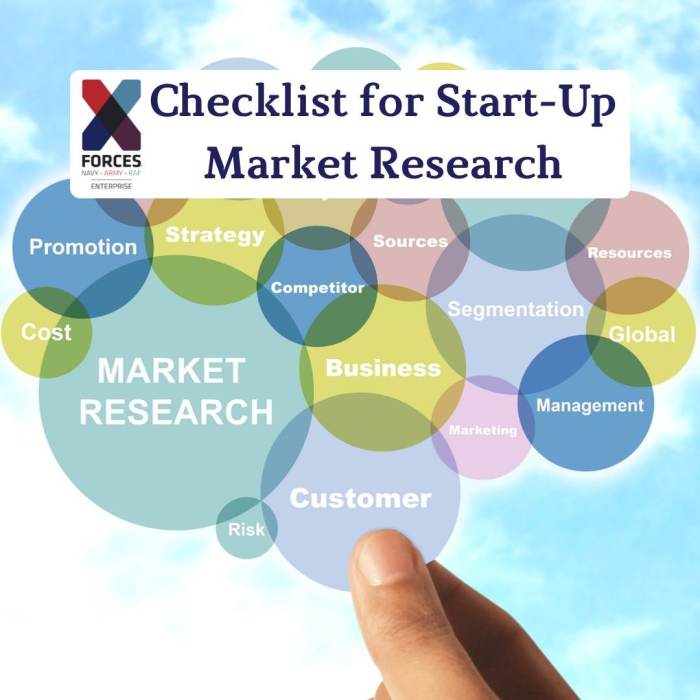
Market research is essential for startups to understand their target market and make informed business decisions. There are different types of market research methods that startups can utilize to gather valuable insights. Let’s explore the various types of market research suitable for startups.
Primary Research
Primary research involves collecting data firsthand by conducting surveys, interviews, focus groups, or observations. This method allows startups to gather specific and up-to-date information tailored to their unique needs. It can be time-consuming and costly, but the insights obtained are valuable for making informed decisions.
- Surveys: Startups can create online or offline surveys to gather feedback from their target audience regarding their preferences, needs, and buying behavior.
- Interviews: Conducting one-on-one interviews with potential customers or industry experts can provide in-depth insights into market trends and consumer preferences.
- Focus Groups: Bringing together a small group of individuals to discuss specific topics can help startups understand the collective opinions and attitudes of their target market.
- Observations: By observing consumer behavior in real-life settings, startups can gain valuable insights into how their target audience interacts with products or services.
Secondary Research
Secondary research involves analyzing existing data and information collected by others, such as reports, studies, and industry publications. This method is cost-effective and time-efficient, as startups can access a wealth of information without conducting primary research. However, the data may not be tailored to the startup’s specific needs.
- Market Reports: Startups can leverage industry reports and market studies to gain insights into market trends, competitor analysis, and consumer behavior.
- Publications: Reading industry publications, journals, and white papers can provide startups with valuable information on market dynamics and emerging trends.
- Online Databases: Accessing online databases and research platforms can help startups gather data on market size, demographics, and consumer preferences.
- Government Sources: Utilizing government sources and official statistics can provide startups with data on economic indicators, regulations, and industry benchmarks.
Qualitative vs. Quantitative Research
Qualitative research focuses on exploring attitudes, opinions, and behaviors through open-ended questions and discussions. It provides insights into the ‘why’ behind consumer actions and helps startups understand the underlying motivations. On the other hand, quantitative research involves collecting numerical data through surveys, questionnaires, and statistical analysis. It provides measurable and structured insights into consumer preferences, market trends, and performance metrics.
Conducting Market Research
Market research is a crucial step for startups to understand their target market, competition, and potential customers. By conducting thorough market research, startups can make informed decisions and develop effective strategies to ensure success in the competitive business landscape.
Steps involved in conducting market research
- Define the objectives: Clearly Artikel the goals and objectives of the market research to focus on specific areas of interest.
- Identify the target market: Determine the demographics, preferences, and behavior of the target audience to tailor products or services accordingly.
- Choose the research method: Select the most suitable research method such as surveys, interviews, focus groups, or observation to gather relevant data.
- Collect data: Gather information from primary and secondary sources to analyze market trends, consumer behavior, and competitor strategies.
- Analyze the data: Interpret the data collected to identify patterns, trends, and insights that can guide decision-making.
- Draw conclusions: Draw conclusions based on the analysis to make informed decisions and develop effective marketing strategies.
- Implement findings: Implement the findings of the market research to improve products, services, and overall business performance.
Designing a market research plan for a startup
- Set clear objectives: Define the purpose and goals of the market research plan to guide the entire process.
- Identify target market: Determine the specific target audience and segment the market based on demographics, psychographics, and behaviors.
- Choose research methods: Select appropriate research methods such as surveys, interviews, questionnaires, or observational studies to gather data.
- Create a timeline: Develop a timeline with milestones and deadlines to ensure the research plan stays on track.
- Allocate resources: Allocate budget, manpower, and tools required for conducting market research effectively.
- Analyze and interpret data: Analyze the data collected to derive meaningful insights and actionable recommendations for the startup.
Organizing data collection methods for effective market research
- Surveys: Conduct online or offline surveys to gather feedback from customers and prospects about their preferences and buying behavior.
- Interviews: Conduct one-on-one interviews with target customers to gain in-depth insights into their needs, challenges, and expectations.
- Focus groups: Organize focus group discussions with a small group of participants to explore opinions, perceptions, and attitudes towards the startup’s offerings.
- Secondary research: Gather information from existing sources such as industry reports, market studies, and competitor analysis to supplement primary research data.
- Observational studies: Observe customer behavior, trends, and patterns in real-life settings to understand how consumers interact with products or services.
Direct Marketing Strategies
Direct marketing strategies involve reaching out to potential customers directly through various communication channels. This approach allows startups to tailor their marketing efforts to specific target audiences and generate leads more effectively.
Personalized Email Campaigns
- Create personalized email campaigns based on customer preferences and behaviors.
- Segment your email list to send targeted messages to different customer groups.
- Include personalized recommendations or offers to increase engagement and conversions.
Social Media Advertising
- Utilize social media platforms to target specific demographics and interests.
- Create engaging and interactive content to capture the attention of your audience.
- Run targeted ads to reach potential customers based on their online behavior.
Direct Mail Marketing
- Send physical mailers or postcards to potential customers in targeted locations.
- Include personalized messages or offers to make the mail more appealing.
- Track responses and follow up with recipients to measure the effectiveness of the campaign.
Advertising and Telemarketing for Startups
Advertising and telemarketing play a crucial role in the growth and success of startups. By effectively promoting their products or services, startups can reach a wider audience and attract potential customers. Let’s explore the benefits of advertising and telemarketing for startups, as well as compare traditional and digital advertising methods.
Role of Advertising in Startup Growth
Advertising is essential for startups to create brand awareness, attract customers, and drive sales. Through strategic advertising campaigns, startups can communicate their unique selling points and value propositions to target audiences. By leveraging various advertising channels such as social media, print, radio, and television, startups can increase their visibility and establish a strong market presence.
Benefits of Telemarketing for Startups
Telemarketing allows startups to engage directly with potential customers through personalized interactions. By making phone calls to prospects, startups can provide detailed information about their products or services, address customer queries, and even close sales deals. Telemarketing helps startups build relationships with customers, gather feedback, and generate leads in a cost-effective manner.
Comparison between Traditional and Digital Advertising Methods for Startups
- Traditional Advertising:
- Includes channels such as print, radio, television, and outdoor advertising.
- Offers broad reach but may be more costly compared to digital advertising.
- Allows startups to target specific demographics based on the chosen medium.
- Provides tangible visibility and credibility through physical ads.
- Digital Advertising:
- Utilizes online channels like social media, search engines, and display ads.
- Offers precise targeting options and real-time performance tracking.
- Allows startups to adjust campaigns quickly based on data and insights.
- Provides interactive and engaging formats to capture audience attention.
Ending Remarks
As we wrap up our exploration of Market research for startups, remember that the key to thriving lies in harnessing the power of data-driven decisions and personalized marketing efforts. Stay tuned for more tips and tricks to elevate your startup game!
Top FAQs
How can market research benefit a startup?
Market research provides valuable insights into consumer preferences, market trends, and competitor strategies, enabling startups to make informed decisions and tailor their offerings effectively.
What are the different types of market research suitable for startups?
Startups can leverage primary research (surveys, interviews) and secondary research (existing data, reports) to gather information. Qualitative methods focus on understanding behaviors, while quantitative methods provide statistical data.
Why is personalized direct marketing important for startups?
Personalized direct marketing allows startups to connect with their target audience on a deeper level, building brand loyalty and increasing engagement. By tailoring messages to individual preferences, startups can enhance their marketing effectiveness.
How does telemarketing benefit startups?
Telemarketing offers a direct and personal way to engage with potential customers, allowing startups to communicate their value proposition effectively and generate leads. It can be a cost-effective method to reach a targeted audience.


